Java4Shell (CVE-2026-114938): What It Is, Who Is Affected, and What to Do Now

On November 17th, Azul shipped the November 2026 Critical Security Patch Update (CSPU) for Azul Core and Azul Prime, within an hour of the coordinated release. It includes the fix for Java4Shell (CVE-2026-114938), a memory-corruption vulnerability in OpenJDK that could allow remote code execution and is drawing wide press attention, including in The New York Times. Here is what it is, who is affected, and what to do now.
What Java4Shell Is
Java4Shell is a memory-corruption flaw in the hardware-accelerated Base64 decoder in OpenJDK’s HotSpot VM on x86-64 systems. The security firm Calif, which found it, shows how an attacker can corrupt the heap and potentially run code remotely. Its write-up demonstrates unauthenticated remote code execution (RCE) against several popular Java applications, including Jira, Confluence, Jenkins, and more.
Calif says its researcher found the bug with AI assistance in about an hour, and that AI agents built most of its exploit chains. That is exactly the accelerating pace of discovery behind the Security-only, Stability-first™ releases of Azul, including the Critical Security Patch Updates (CSPU) of November 17th for Azul Core and Azul Prime.
Who Is Affected
Java4Shell affects certain Java versions running on x86-64 systems with AVX-512 enabled. For Azul customers, that means:
- Azul Core: Java 17 (17.0.6 and later), 21, 25, and 27.
- Azul Prime: Java 8, 11, 17, 21, and 25, in releases earlier than the fixed versions below.
AVX-512 (Advanced Vector Extensions 512) is a set of instructions for x86 CPUs. It is available on most current-generation x86 server processors, including Intel Xeon P-core models since Ice Lake and AMD EPYC since Zen 4, and on the cloud instances built on them. A large share of modern x86 servers is in scope. Because the flaw is in OpenJDK code, if you run a different Java distribution, check with your vendor.
How Severe Is It?
Java4Shell is rated 8.1 (High) under CVSS 3.1, the standard OpenJDK uses, and 9.2 (Critical) under the newer CVSS 4.0, which Calif and most articles cite. It is the same assessment expressed in two different standards, not a disagreement about the bug. Either way, we treat it as critical.
Remote code execution is a more serious class of risk than last month’s eMudhra certificate compromise, which enabled impersonation. Java4Shell is harder to weaponize quickly than Log4Shell, which gives defenders some time. But as Calif’s chief executive, Thai Duong, told The New York Times, “vulnerabilities have a very long tail.” Most large enterprises run an affected Java version on affected hardware somewhere, and systems that do not get patched could stay exposed for years.
Is Java4Shell a Zero-Day?
No. Details of CVE-2026-114938, including its CVE ID and severity, became public before the coordinated release on November 17th, so many customers reached out worried that it was a zero-day. It is not. It was reported through the OpenJDK vulnerability process, and the fix shipped in the CSPU scheduled for November 17th.
No exploit was made public before the fix. Calif published its technical write-up only after the patches shipped, alongside OpenJDK’s official advisory, and it is still withholding its product-specific exploit code. As of the evening of November 17th, no exploitation in the wild has been reported, and the CVE is not in CISA’s Known Exploited Vulnerabilities (KEV) catalog.
Why Speed Matters
Java4Shell is a live example of the gap highlighted in our 2026 AI Vulnerability Gap Report. 69% of the security leaders we surveyed say an attacker equipped with AI can build a working exploit in three days or less. Yet only 13% say their organization can deploy a critical patch in under 24 hours. Closing that gap starts with having the fix on the day it is released.
Recent Acceleration of AI Discovered Vulnerabilities in OpenJDK
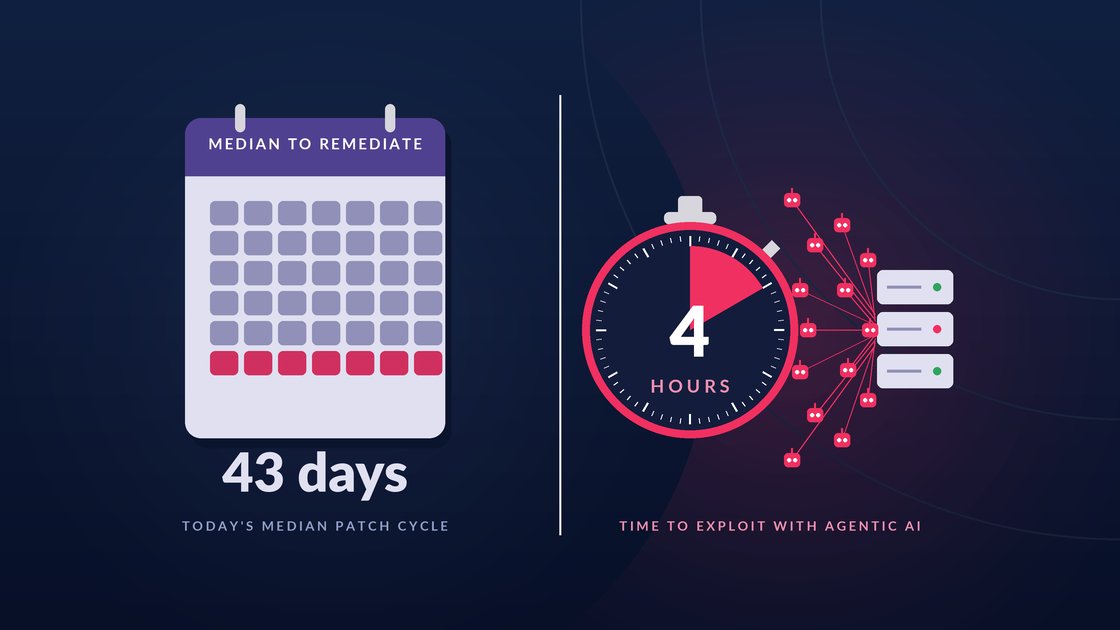
Java is one of the most battle-tested platforms in enterprise computing. Yet AI continues to discover and expose flaws that survived years of testing and review, and Java4Shell comes on the heels of an all-time high of 53 CVEs disclosed in the OpenJDK October 20th quarterly update. This was followed in immediate succession by two eMudhra CA certificate compromise for OpenJDK critical zero-day vulnerabilities on October 21st and October 24th. While the latter two zero-days where not AI-related, enterprises are confronted with the need to increase OpenJDK patch velocity and remediation, as AI is collapsing the mean time to exploit to negative days while the median enterprise patch cycle remains at 43 days.
Azul is the only vendor to offer Security-only, Stability-first™ quarterly, monthly, and out-of-cycle OpenJDK updates, which contain only security fixes, with no new features or unrelated bug fixes. These are built on the previous quarter’s stabilized full patch update, which Azul and the broader Java community have already tested extensively. With changes limited to security fixes only, enterprises who are Azul Core customers can deploy the Security-only, Stability-first™ CSPU straight to production with dramatically reduced risk of regression.
What to Do Now
Update. Move to the November 2026 CSPU as soon as possible. The fix is in the November 17th Azul Core CSPU builds, on our most recent update from our Security-only, Stability-first™ line, which are available to Azul Core customers, as well as Azul Core CSPU builds based on our full Patch Set Update (PSU) line and in Azul Prime 26.08.110.0 and 26.02.510.0. Beyond Java4Shell, the update fixes 10 other CVEs that affect every Java version we support.
Find your exposure. Ask your infrastructure team which hosts are x64 with AVX-512 enabled, and where affected Java versions run on them. Azul Runtime Inventory shows which Java runtimes you run in production and whether each is on the latest security update.
Get patched. We can help.
FAQ
What is Java4Shell (CVE-2026-114938)?
Java4Shell is a memory-corruption flaw in the hardware-accelerated Base64 decoder in OpenJDK’s HotSpot VM, found by the security firm Calif. On x86-64 systems with AVX-512 enabled, an attacker can corrupt the heap and potentially run code remotely. Azul fixed it in the November 2026 Critical Security Patch Update (CSPU) for Azul Core and Azul Prime.
Which Azul products and versions are affected by Java4Shell?
Azul Core is affected in Azul Core for Java 17 (17.0.6 and later), 21, 25, and 27, and Azul Prime is affected in Java 8, 11, 17, 21, and 25, in releases earlier than the fixed versions. Both are affected only on x86-64 systems with AVX-512 enabled. The fix is in November’s Azul Core CSPU builds and in Azul Prime 26.08.110.0 and 26.02.510.0.
Is Java4Shell a zero-day vulnerability?
No. Java4Shell was reported through the OpenJDK vulnerability process, and Azul shipped the fix in its scheduled November 2026 CSPU. Calif published its technical write-up only after the patches shipped and is withholding its product-specific exploit code. As of November 17, 2026, no exploitation in the wild has been reported, and the CVE is not in CISA’s Known Exploited Vulnerabilities catalog.
How severe is Java4Shell?
Java4Shell is rated 8.1 (High) under CVSS 3.1, the standard OpenJDK uses, and 9.2 (Critical) under CVSS 4.0, which Calif and most articles cite. These are the same assessment in two standards, and Azul treats the vulnerability as critical because it can lead to remote code execution.
How do I fix Java4Shell in Azul Core and Azul Prime?
Update to the November 2026 CSPU. For Azul Core, use the new Azul Zulu builds, either Security-only, Stability-first™ updates or PSU. Check the Azul website for all the latest downloads. For Azul Prime, use 26.08.110.0 or 26.02.510.0. The update also fixes 10 other CVEs that affect every Java version Azul supports, see the full Core November Release Notes.
Found a mistake, or something to add? Edit this page on GitHub

Pavel Petroshenko
Senior Director of Product Management at Azul Systems
Related posts
Free Java, Real Risk: Why Unsupported OpenJDK Is Now a Security Gamble

 197 views