
Stable, Secure, and Affordable Java
Azul Platform Core is the #1 Oracle Java alternative, offering OpenJDK support for more versions (including Java 6 & 7) and more configurations for the greatest business value and lowest TCO.
Jakarta EE 11: Beyond the Era of Java EE
This user guide provides a brief history of Java EE/Jakarta EE and a detailed overview of some of the specifications that will be updated in Jakarta EE 11.
Step up your coding with the Continuous Feedback Udemy Course: Additional coupons are available
What do you know about the code changes that were just introduced into the codebase? When will you notice if something goes wrong?
Do you want your ad here?
Contact us to get your ad seen by thousands of users every day!
[email protected]Carl Dea
AdministratorCarl Dea is a Lead Developer and Software Engineer at Deloitte. He has authored Java books and has been developing software for 20+ years with many clients, from Fortune 500...
Learn MoreRecent comments
Carl Dea
For the Record!Sirisha, Excellent blog post on the new Java records! Just for fun and not to...
All 0 Likes
Primitive Set Operations in Eclipse Collections — Part 2
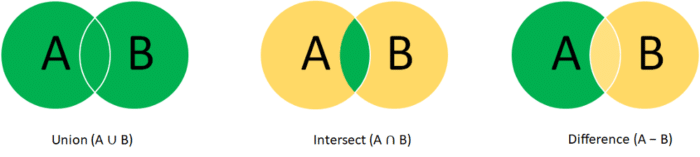
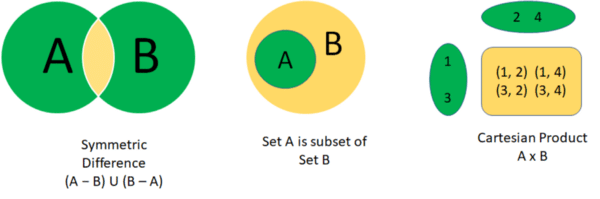
Continuing from Part 1, in the Eclipse Collections 11.0 release, we will have the following Set operations union, intersect, difference, symmetricDifference, isSubsetOf, isProperSubsetOf, cartesianProduct on primitive collections. These APIs are already available on Sets on the object side, but my goal was to implement these methods for Sets supporting primitive types namely IntSet, LongSet, ShortSet, DoubleSet, FloatSet, CharSet, BooleanSet, ByteSet. Additionally, the above operations will be available in both mutable and immutable interfaces.
Eclipse Collections has a rich assortment of data structures, and one of them is a Set.
Recently, I worked on an issue to implement union, intersect, and difference operations in sets for primitive types.
The sections below cover each operation’s objective, design considerations, and code implementation.
The last section covers the takeaways.
Ever since Java announced their 6-month release cycle, there is excitement around exploring new features and even more so with preview features.
Now, what is a record? It is a new variety of type declaration. It is also a sub-type of class. A common type of class, as we all know, is the data-carrier class. They are classes that have some fields and their corresponding getters and setters. They usually have little to no logic.
Records help provide a way to succinctly describe the intent of these data-carrier classes. A little less conversation, a little more action.
So happy to see @OpenJDK uses #SonarCloud to guarantee High #CodeQuality for @java #Java25 @SonarSource
https://bugs.openjdk.org/browse/JDK-8357798
The hottest #Java unconference in the world is coming back 27-31 July 2026 (starting evening of 26th). Deep discussions about Java and life. We are making some seats available using a lottery system. Draw will be on Friday the 20th Feb. Sign up here: https://www.jcrete.org/lottery
Confession: I usually lose the Flow switching between Quality Gates and Code 📉😅
But I connected @claudeai + #SonarQube via #MCP
Verify & Fix vulnerabilities without touching the mouse.
Zero context switching. Pure flow. 🚀
https://foojay.io/today/claude-code-sonarqube-mcp/
#Java #AI @foojayio
All 1 Comments
Carl Dea
• 5 years agoSirisha, Excellent blog post on the new Java records! Just for fun and not to be nit-picky (I was in...