


The Triforce That Slays Legacy Java Myths – Happy 40th Zelda!
- February 21, 2026
- 4 min read

Happy 40th Anniversary to The Legend of Zelda! 🎉🗡️
Today, February 21, 2026, marks exactly 40 years since the original game launched in Japan on February 21, 1986. From the humble 8-bit NES adventure to the breathtaking open worlds of Breath of the Wild and Tears of the Kingdom, Zelda has constantly reinvented itself. Zelda evolved.
And that spirit perfectly mirrors what’s happening in the Java world right now. Java evolved.
For years, people repeated the same sentence: “Java is slow.”, but just like saying “Zelda is still an 8-bit game,” that statement is outdated.
In The Legend of Zelda, the Triforce is a sacred golden triangle made of three smaller pieces: Power, Wisdom, and Courage. Created by the Goddesses Din, Nayru, and Farore, it grants incredible power to whoever unites all three with a balanced heart. Hidden in the Sacred Realm, it has been sought by heroes like Link and villains like Ganon for centuries, symbolizing strength, intelligence, bravery, and the perfect balance needed to save (or conquer) Hyrule.
Java 25 turns the tide and proves Java is fast, efficient, and ready for modern demands with the triforce of performance improvements.
The Triforce of Performance Improvements in Java 25
Power (Ahead-Of-Time Cache) - JEPs 483, 514, and 515
During a training run, the system profiles the application to identify the classes and methods that are actually used, then creates a highly optimized cache specifically for those elements. When the application launches, this pre-built cache is loaded directly into memory, bypassing much of the normal Just-In-Time (JIT) compilation work and delivering a much faster cold start.
JEP 515 takes this even further by incorporating detailed profiling data gathered by the JIT compiler during previous runs. This makes the AOT cache smarter and more tailored to the real-world behavior of the application, resulting in even greater efficiency.
The biggest improvements show up in applications with many classes and methods — exactly the kind of codebases that traditionally suffer long startup delays. In practice, this can cut startup time by up to 50%, depending on the workload.
Wisdom (Garbage Collector Evolution) - JEPs 521, 474 and 423
Java offers a variety of Garbage Collectors (GCs) tailored to different application requirements. With Java 25, notable enhancements have been introduced to the G1, ZGC, and Shenandoah collectors.
Shenandoah is a low-pause GC engineered to keep application stop-the-world pauses to a minimum by executing the majority of its work concurrently while the application runs. It is not the default collector in Java and is particularly well-suited for applications managing very large heaps, such as those found in Big Data environments. Thanks to JEP 521, Shenandoah now includes a generational mode in addition to its traditional non-generational mode.
ZGC has also adopted generational support through JEP 474, which has deprecated its previous non-generational mode. Since the generational approach typically delivers superior performance, future ZGC development will prioritize this mode.
Lastly, the default garbage collector in Java 25, G1, has been improved via JEP 423. These updates specifically target shorter pause times during operations that involve JNI (Java Native Interface) calls, making G1 even more efficient in mixed Java-native workloads.
Courage (Compact Object Headers) - JEPs 450 and 519
By reducing object header size from between 96 and 128 bits to only 64-bit, compact object headers bring significant heap size reductions to applications. Profiling shows up to 22% reduction in heap size and 8% less CPU time on common benchmarks.
The payoff is especially clear in object-heavy workloads and memory-constrained environments, such as those found in containers and cloud-native deployments.
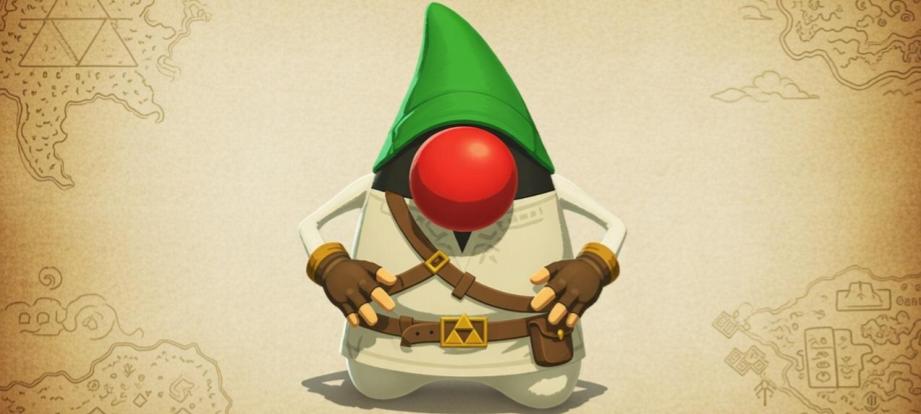
From 8-Bit to Open World – A Parallel Journey Java Has Leveled Up (Evolved)
Just as Zelda has evolved from 2D pixel hero to open-world legend over 40 years, Java has evolved from “enterprise slowpoke” to a lean, high-performance champion.
A community project called java.evolved was recently launched to document how common Java coding patterns have changed across releases. Instead of explaining features in isolation, the site presents“before and after”examples: traditional idioms next to modern alternatives.
So like Zelda and Java evolved, you and your code can evolve as well.

So next time someone says: “Java is slow”, you can answer: That was the 8-bit era and we’re in the open-world era now.
Java 25 is here, and it’s no longer slow. Happy 40th Birthday, Zelda, and happy performant coding, everyone!
What Java 25 feature are you most excited to try? Drop it in the comments, let’s keep the legend alive.
- February 21, 2026
- 4 min read

Igor currently works as a Software Engineer in a Data Engineer team. With over 20 years of experience with Java and over 10 years in the Big Data world, Igor had the opportunity to work with Hadoop and its ecosystem right when Hadoop was created. In his spare time, he enjoys playing with Raspberry Pi and is an active member of the Maker community, highly engaged with STEM and CoderDojo. Igor Organizes a Facebook group for Brazilian IT in Ireland with over 12k participants. He is currently working on a pet project where he uses a Led Strip to teach basic concepts of data structure e data streaming.







Comments (1)
Matheus Oliveira
1 month agoThanks for sharing such insightful content — I loved the "Link-Duke"!