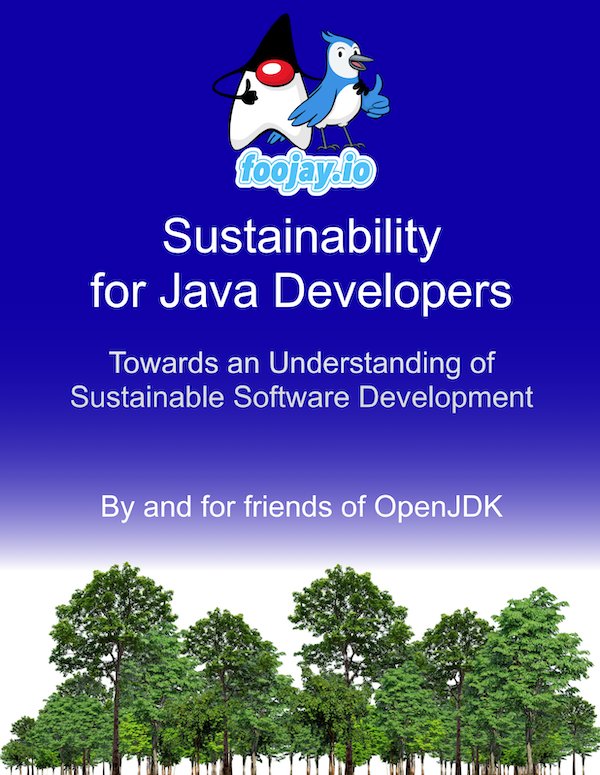
Announcing: Sustainability for Java Developers

 2 min read
2,550 views
2 min read
2,550 viewsJava developers from around the world are writing a book about a question that’s becoming impossible to ignore: how do we write software that’s good for both our projects and the planet?
Sustainability for Java Developers: Towards an Understanding of Sustainable Java Software Development is now freely available on Leanpub, bringing together Java Champions, architects, and technical writers to look at sustainability from every angle.
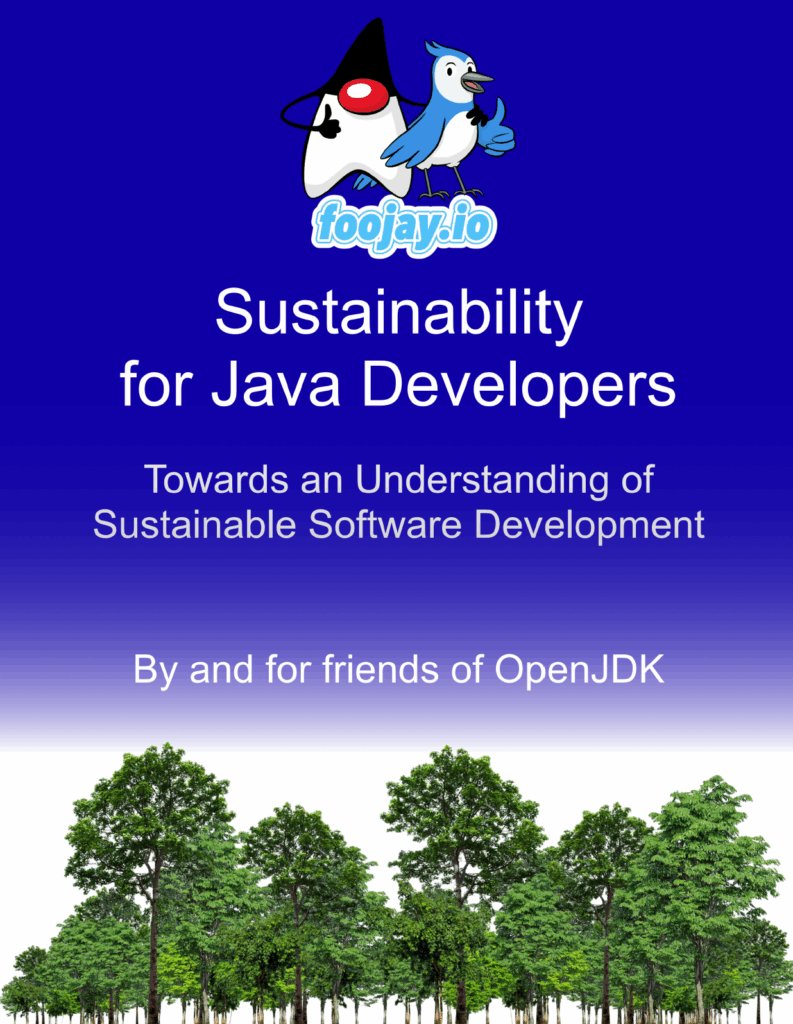
The book covers everything from the environmental footprint of our data centers to the ethics of open source supply chains, from efficient data formats to the often-overlooked topic of career longevity.
The current chapters (because the book continues to grow and everyone is invited to participate) are:
- Chapter 1: Fair Trade Software — Maarten Mulders and Geertjan Wielenga
- Chapter 2: Stopping the Data Madness — Frank Delporte
- Chapter 3: Impact of Architecture — Simon Martinelli and Jan Ouwens
- Chapter 4: Career and Wellbeing — Markus Westergren
- Chapter 5: Sustaining Success: Java’s Evergreen Appeal in a Rapidly Changing Tech Landscape — A N M Bazlur Rahman
- Chapter 6: Simple Things You Can Do Right Now — Jan Ouwens and Ko Turk
- Chapter 7: Java as a Scripting Language: Sustainable Code from Day One — A N M Bazlur Rahman
You’ll find practical advice you can use today—like configuring build caching or using Java 25’s scripting features—alongside deeper discussions about mentorship, community, and why sustainable practices actually make business sense.
The project has grown out of the Foojay (Friends Of OpenJDK) community, where members from different companies and countries found they shared the same concerns about sustainability.
Because it’s published on Leanpub, the book will keep evolving with reader feedback—and others are welcome to join in with their own content.
You can get your copy now at leanpub.com/sustainabilityforjavadevelopers.
Found a mistake, or something to add? Edit this page on GitHub
A N M Bazlur Rahman
A N M Bazlur Rahman is a Software Engineer with over a decade of specialized experience in Java and related technologies. His expertise has been formally recognized through the prestigious title of Java Champion. Beyond his professional commitments, Mr. Rahman …
Frank Delporte
Frank Delporte is a Java Champion, Java Developer, Senior Technical Writer at Azul, Blogger, Author of "Java Programming for Raspberry Pi - A Hands-On Guide to Electronics and IoT Projects", and Open-Source Contributor for Pi4J, Lottie4J, Sheetmusic4J and …
Geertjan Wielenga
Geertjan is an open source and Java enthusiast, Java Champion, Apache Member, and leader of the Amsterdam Java User Group.
Ko Turk
⚡️Voxxed Days Amsterdam Organiser 👭 CodelabJUG 🗣 Speaker ✔ Software Architect @CodeLab 🍀 Green Software Champion

Markus Westergren
I help professional Java developers like you to write maintainable code so that you can become a sought-after expert in the software development industry.
Maarten Mulders
Maarten is a solution architect, senior Java developer, and technical trainer at Info Support with a passion for developer productivity and software quality. He is recognised as a Java Champion and Oracle ACE Pro for his contributions to the Java community …

Simon Martinelli
Simon Martinelli is a Java Champion, Vaadin Champion, and Oracle ACE Pro, with over three decades of experience as a software architect, developer, consultant, and trainer. As the owner of Martinelli LLC, he specializes in optimizing full-stack development …